Initiative determines the order of turns during combat. When combat starts, every participant makes a Dexterity check to determine their place in the initiative order. The GM makes one roll for an entire group of identical creatures, so each member of the group acts at the same time.
How long does it take for combat round to end?
When everyone has had a turn, the combatant with the highest initiative acts again, and steps 4 and 5 repeat until combat ends. The Combat Round Each roundrepresents 6 seconds in the game world.
How does the Order of combat work in RuneScape?
Everyone involved in the combat encounter rolls initiative, determining the order of combatants’ turns. Take turns. Each participant in the battle takes a turn in initiative order. Begin the next round. When everyone involved in the combat has had a turn, the round ends. Repeat step 4 until the fighting stops.
What do you need to know about combat orders?
Combat orders instruction at The Basic School (TBS) is a detailed, rigorous package that strives to develop and evaluate your ability to communicate a tactical decision to peers and subordinates in order to execute your plan in a time-competitive environment.
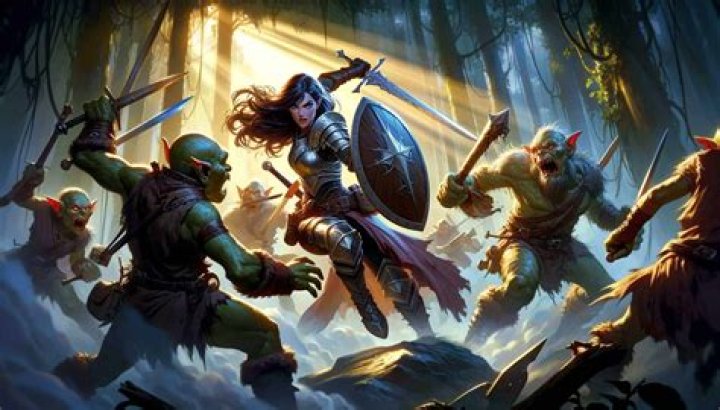
The game organizes the chaos of combat into a cycle of rounds and turns. A round represents about 6 seconds in the game world. During a round, each participant in a battle takes a turn. The order of turns is determined at the Beginning of a combat encounter, when everyone rolls Initiative.
What happens when a creature interrupts Your Turn in combat?
If the Reaction interrupts another creature’s turn, that creature can continue its turn right after the Reaction. In combat, characters and Monsters are in constant motion, often using Movement and Position to gain the upper hand. On Your Turn, you can move a distance up to your speed.
Can a foreach loop be used to repeat an action?
A “Foreach” loop repeats one or more actions on each array item and works only on arrays. Here are some considerations when you use “Foreach” loops: The “Foreach” loop can process a limited number of array items. For this limit, see Concurrency, looping, and debatching limits.
When to use the apply to each action?
These triggers are great, but sometimes you want to run a flow that queries a data source on a predefined schedule, taking certain actions based on the properties of the items in the data source. To do this, your flow can be started on a schedule (such as once per day) and use a loop action such as Apply to each to process a list of items.
What are the different types of combat actions?
There are six types of actions: standard actions, move actions, full-round actions, free actions, swift actions, and immediate actions . In a normal round, you can perform a standard action and a move action, or you can perform a full-round action.
Can you take a move action in place of a standard action?
You can take a move action in place of a standard action. If you move no actual distance in a round (commonly because you have swapped your move for one or more equivalent actions), you can take one 5-foot step either before, during, or after the action. A full-round action consumes all your effort during a round.
How does the GM rank the combatants in combat?
The GM ranks the combatants in order from the one with the highest Dexterity check total to the one with the lowest. This is the order (called the Initiative order) in which they act during each round. The Initiative order remains the same from round to round.